Port Perry Locksmith Co.
Issue 1 of 3LocksmithScugog, Ontario
Lost Keys — Same-Visit Rekey: step by step
When a key disappears, cutting yourself another copy solves the wrong half of the problem.
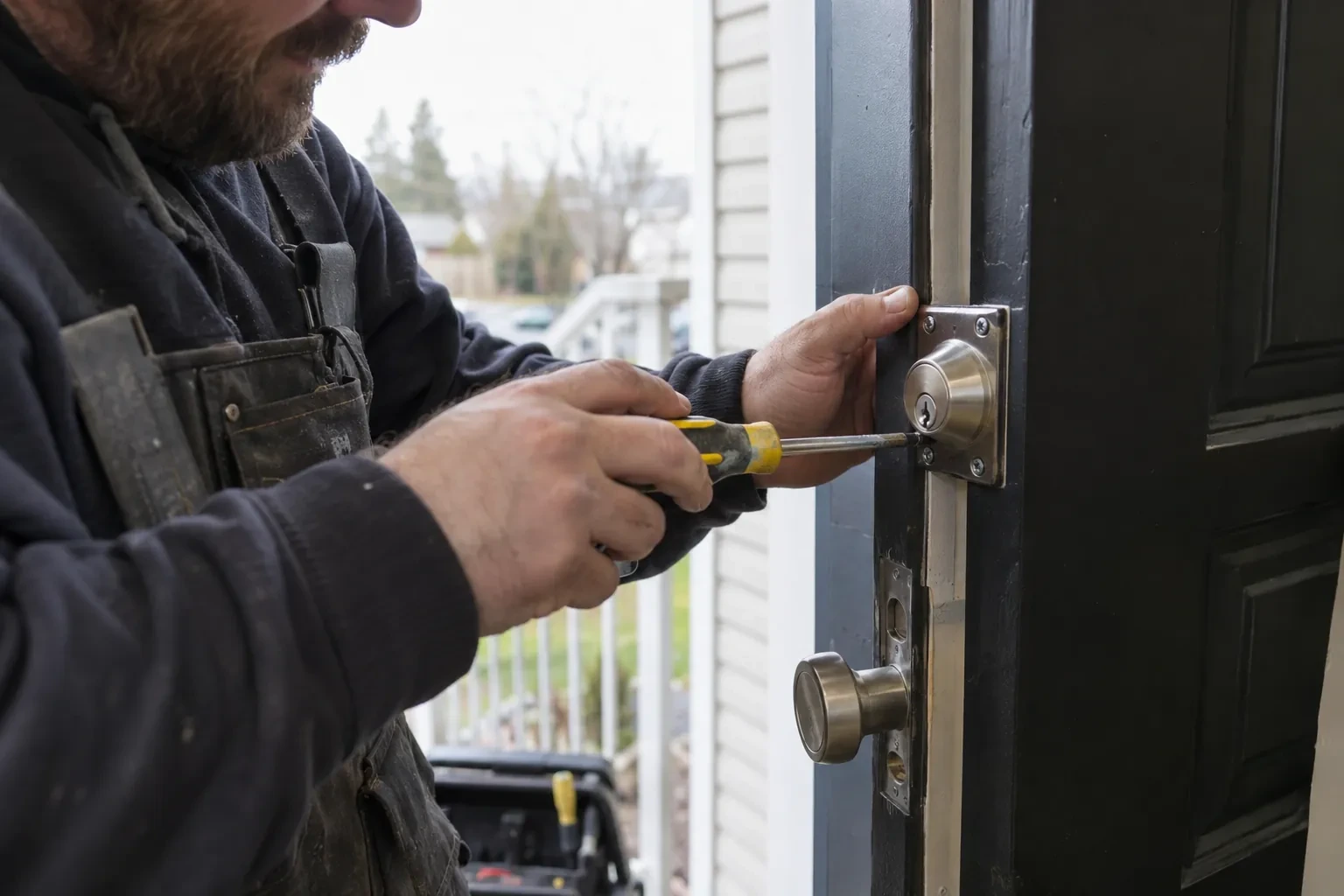
When a key disappears, cutting yourself another copy solves the wrong half of the problem. You can get in again, but so can whoever finds the original. A same-visit rekey turns that around: the locksmith works through each cylinder the missing key operated, fitting new bottom pins on a conventional lock or resetting a homeowner-rekeyable one through its own procedure, and refits the lock to the door. The lost key still slides into the keyway but no longer lifts the pins to the right height, so it turns nothing. You leave with fresh keys cut on site and the same locks you already had.
Reading each cylinder before it comes off the door
Every cylinder on the list gets a close look while it is still in the door. The keyway shape and the maker's stamp tell the locksmith which pin kit fits and whether the keys can be cut on the van. The feel of the plug with a working key, if one exists, says whether the pins and springs are healthy or tired. Corrosion on the face, a wobbly plug or a key that needs a jiggle points to a cylinder that will benefit from cleaning or replacing while it is out. A homeowner-rekeyable cylinder, recognisable by its small reset slot beside the keyway, calls for a different tool and gets noted.
Handling a restricted or high-security keyway
Restricted and patented keyways rekey in much the same way, with more parts and a little more care. A high-security cylinder's own elements, a sidebar's finger pins, a rotating element or another system-specific part, are reset to the new key's profile alongside the ordinary pins, and the finished plug is checked before refitting. Key blanks for these systems are issued through whatever authorised channel that system uses, a letter, a registered account, a dealer agreement, or sometimes a key card; bring whatever credential you were given. The reward is that copies of the new key can only be made through that same channel, one of the stronger kinds of key control a household can have.
Spares that live outside the house
A rekey is the natural moment to decide where the spare goes, because the one under the planter is the reason many of these calls happen. A key with a trusted neighbour or nearby relative is the simplest answer. A small combination lockbox fixed in a discreet spot, with the code shared only with the people on your list, is a step up and can be fitted before the locksmith leaves. For families with a keypad lock, a personal code for each member does the same job without a key at all. Whichever you pick, the spare is now a planned thing with a known home rather than a habit.