Change or rekey · Scugog
Lock Replacement & Upgrade
The century home's original mortise lock takes a key the size of a spoon, sticks in humid weather and has worn its strike to a groove. You want a lock that works every day without giving up the old door.
Lock Replacement & Upgrade
In plain words
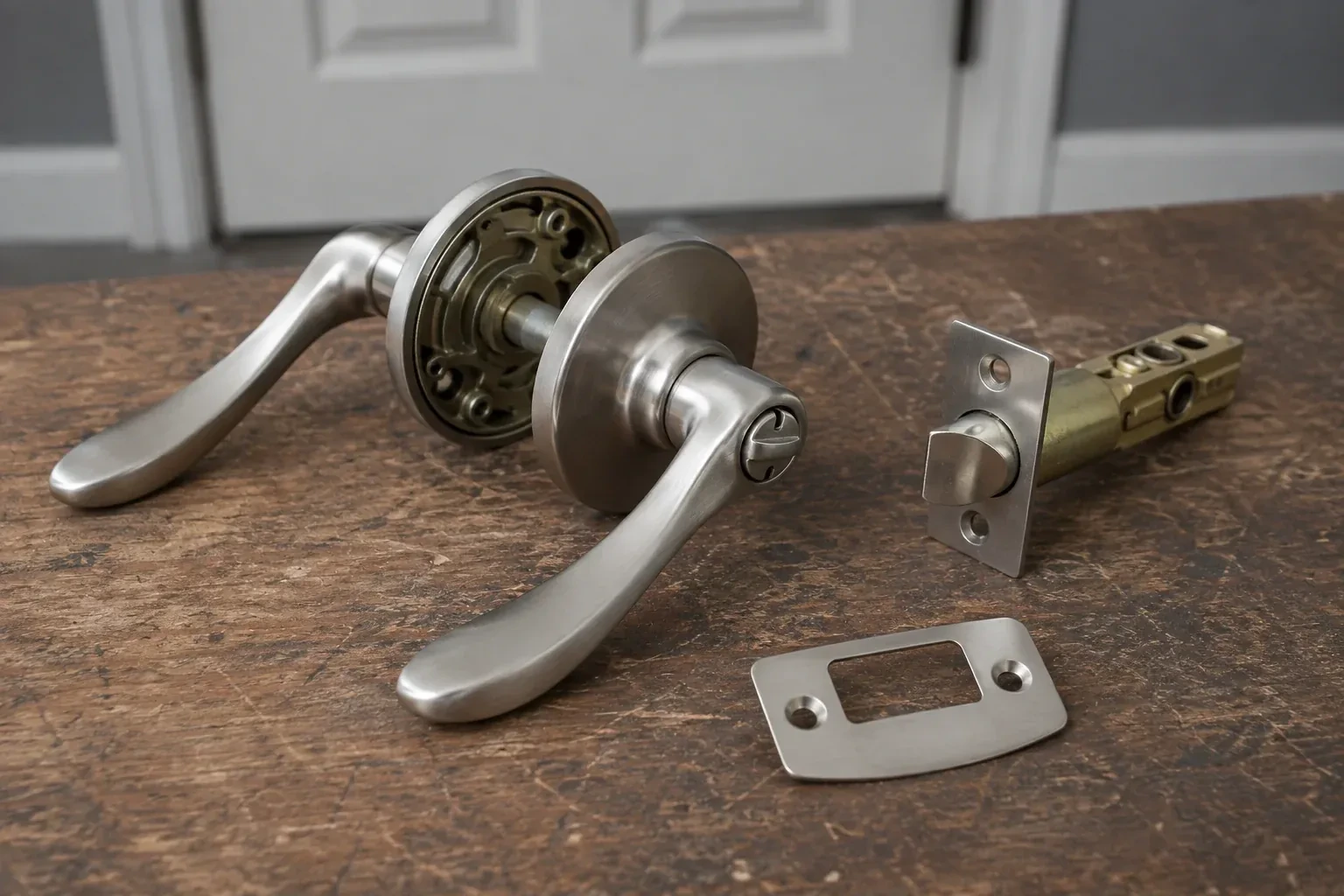
A replacement lock has to fit holes that already exist, and that is where the visit begins. The locksmith measures the backset, the distance from the door edge to the centre of the bore, which on most doors is 60 or 70 millimetres, checks the cross-bore diameter and edge-bore size, notes door thickness and handing, and looks at the strike cut-out. Most residential hardware is made to these standard preparations, so the new lock usually drops into place with no new drilling. Where a mortise lock or a thick door departs from the norm, filler plates, extension kits or a careful new bore bring the door up to standard.
How the visit goesSomeone tried the back door while you were away. The jamb is splintered around the strike, the bolt is bent, and the knob turns with a grinding feel. Everything held, barely, and you want hardware that would do better next time.
Scugog
How the visit goes
How the old lock behaves in use
The locksmith works the existing hardware the way you do every day and watches for the tell-tale signs. A key that must be lifted or wiggled points to worn pins or a worn key. A knob that turns too far, or a lever that droops, suggests a tired spindle or spring. A latch that stays retracted, or a bolt that stops short, can be internal wear or something outside the lock altogether. Doing this with the door open first, then closed, separates faults inside the mechanism from faults in the fit of the door, and that distinction decides whether new hardware is the answer or part of the answer.
Setting and reinforcing the strike
The strike side is where a replacement earns most of its value. With the door closed, the bolt is thrown and its mark checked against the pocket so the strike can be positioned to accept the full throw without rubbing. A shallow pocket is deepened until the bolt seats to its stop. Then a reinforced strike or a strike box is fitted using 75 millimetre screws that pass through the jamb and bite into the framing behind it, which is what stops a jamb splitting under a kick. Where an old forced entry has cracked the wood, it is glued and dowelled or a repair plate is fitted first.
Keys counted, named and planned
You receive the agreed number of keys, cut from the new pinning and tried in every door they should open, plus any code cards for a restricted system, which are what future copies are cut from. It is worth deciding on the spot who gets one and where the spare lives, ideally with a trusted neighbour or in a lockbox rather than in a drawer inside. If the house is now on a single key, retire every old key so none can be confused with the new one. A written list of which key does what goes in the home file.
Lock Replacement & Upgrade
In the van
- Boring jig and hole saws
- Key blanks and key cutter
- Knob or lever entry set
- Manufacturer-approved cylinder lubricant
- Handleset with matching deadbolt
What affects the quote
Same fees day, night or weekend
1Keying alike and rekeying
Pinning new cylinders to one key and repinning existing locks to match is work per cylinder, so a whole house on a single key is quoted by the number of locks joining it.
2Strike reinforcement and jamb repair
A reinforced strike with long screws is a modest addition; repairing a jamb split from a forced entry, or fitting a strike box into a frame that has never had one, adds labour and materials.
3Changes to the door preparation
Adjusting a strike mortise is minor; boring a new hole for a deadbolt, fitting a filler plate over an old mortise pocket or adapting a thick door with extension kits is quoted as its own item.
Lock Replacement & Upgrade: questions
Can every door in the house work from one key?
Yes, provided the cylinders share a compatible keyway, which the locksmith checks when choosing hardware. New cylinders are pinned on site to a single new key and any existing locks worth keeping are repinned to match. Front, back, side and garage doors commonly end up on one key, and a shed or gate padlock can join them. You then decide how many copies exist and who holds each.
Can the same visit replace locks on more than one door, or does each door need its own appointment?
One visit usually covers every door on the job. The locksmith brings a range of cylinders and strikes, measures each door's backset and bore, and works through the list in order, front entrance first if a key change matters most there. Having a rough list ready, which doors, and whether they should end up on one key or several, lets the locksmith plan hardware before arriving rather than working it out door by door on site.
Is there anything different about steel or fibreglass doors?
The lock hardware is the same; the door construction changes the method. Steel and fibreglass doors have a wooden or composite block inside the lock stile, and existing bores are used wherever possible. Where a new deadbolt must be added, the locksmith drills with a jig and bits suited to the skin so the hole is clean and square, and fits an edge plate designed for that door. Insulated doors also move less with humidity, so alignment tends to hold well.
Change or Rekey Locks
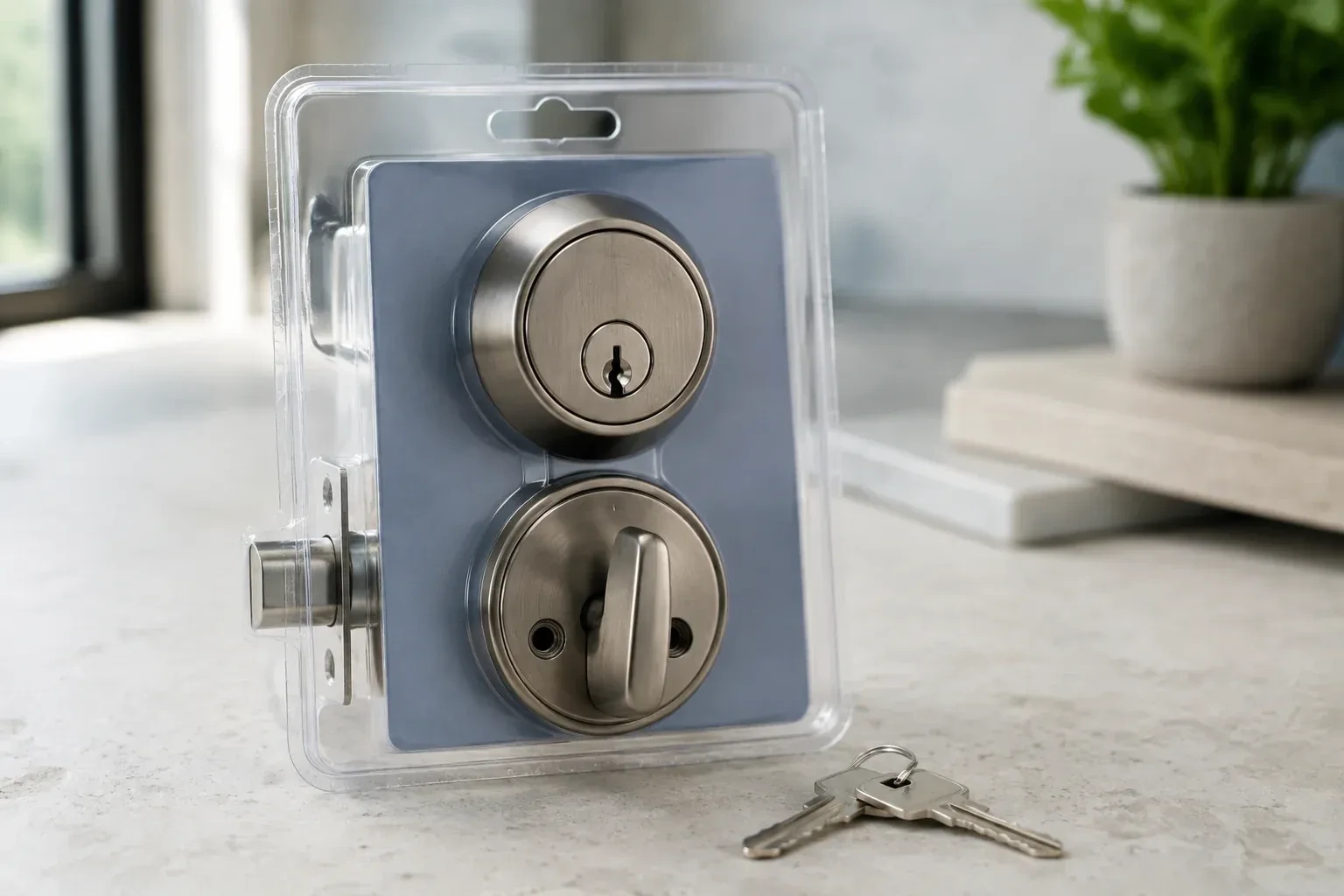
- Deadbolt InstallationSomeone tried the door last winter.
- Vintage Mortise Lock ServiceThe old skeleton key still fits the keyhole, but it now needs a jiggle, a lean on the door and a…
- Smart Lock InstallationYour mother still lives on her own, and the personal support worker, the pharmacy delivery and two…
Lock Replacement & Upgrade near you
One team handles every service on this page for Scugog, so a lockout can turn into a rekey, and a rekey into a properly set deadbolt, within the same visit if you want it. Each service is described separately below, but at the door they fit together as one piece of work.