Change or rekey · Scugog
Deadbolt Installation
Someone tried the door last winter. The frame took it, but the strike plate is bent, one screw hole is stripped, and the bolt sits in the pocket at a slight angle.
Deadbolt Installation
In plain words
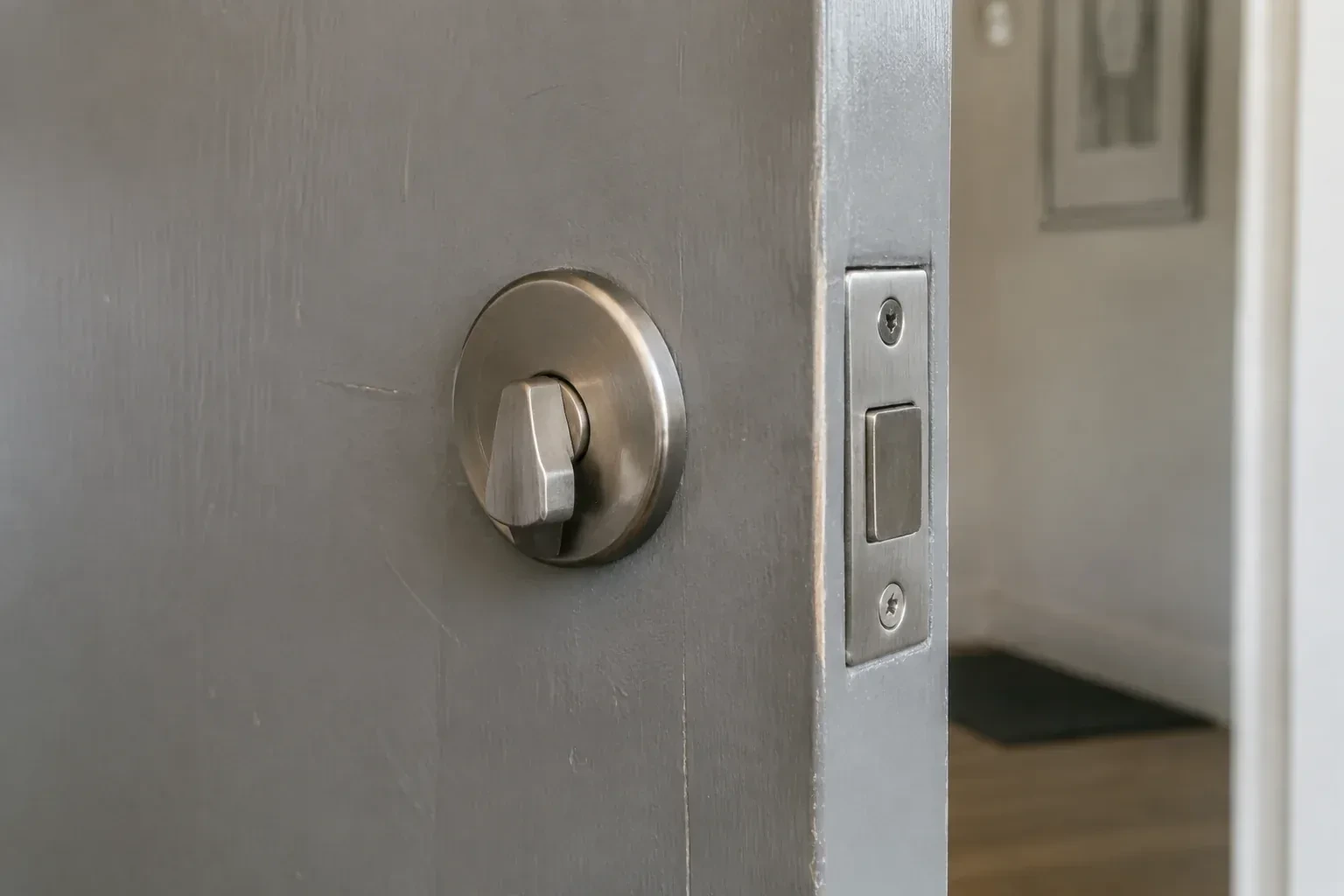
If your door already has a knob or lever bore and nothing above it, adding a deadbolt is a boring job in the literal sense. A jig clamps to the door at the right height, usually 140 to 150 mm above the knob centre, and guides a hole saw through the face and a smaller bit through the edge. The locksmith mortises the edge so the bolt faceplate sits flush, sets the bolt to the door's backset, then fits the cylinder outside and the thumb-turn inside. The frame is marked from the bolt itself, bored and chiselled for the strike, and the lock is tested open and closed.
How the visit goesThe old deadbolt has grown lazy. You turn the thumb-turn and the bolt creeps out halfway, then needs a second push with the door pulled tight. Some mornings the key has to be jiggled before it will come back out.
Scugog
How the visit goes
Where the bolt should sit on the door
On a door with no deadbolt yet, its height is not fixed by the manufacturer but by the door in front of you. The usual spot is 140 to 150 mm above the centre of the knob, which places the bolt near the strongest part of the lock stile and keeps both locks within one comfortable reach. The locksmith checks that this height misses any glass, decorative panel, hinge line or the wood block inside an insulated door, and that the frame behind that spot is solid rather than a gap between shims. If a storm door or screen door shares the opening, the bolt's thumb-turn and cylinder have to clear it as well.
Working on a steel-clad or fibreglass door
Insulated doors are cut with the skin in mind. A hole saw with fine teeth is run at low speed through the metal face, with the jig doing the steering so the saw does not skate on the smooth surface, and the cut is finished from the second face to keep both skins clean. Swarf is vacuumed out of the core so it cannot work into the bolt. The edge is usually a wood or composite stile inside a folded metal lip, and the bolt is finished with a drive-in collar or a plate screwed into the stile rather than a chiselled mortise. Fibreglass is scored first so the skin does not chip, then cut the same way.
A frame that now holds the bolt
Behind the new strike plate is the part of the job you cannot see and will never need to think about. The pocket has been bored deep enough for the bolt to seat fully, the plate has been let into the jamb so it sits flush, and the long screws reach through the jamb into the framing behind it. On a door that had been forced or had stripped screw holes, a full-length reinforcer may sit under the strike. If you press the jamb with your palm now, it does not flex. That stiffness is what a bolt needs to do its work, and it is the reason the installation took as long on the frame as on the door.
Deadbolt Installation
In the van
- 25 mm auger bit
- Bolt faceplate or drive-in collar
- Manufacturer's bore template
- Sharp chisel and mallet
- Jamb reinforcer
What affects the quote
Same fees day, night or weekend
1Number of doors
One front door is the simplest case. Front, back, side and garage-to-house doors done in one visit share the travel and setup, so the per-door figure usually eases as the count rises.
2Glass near the lock
A captive thumb-turn, laminated glass, security film or a relocated bolt height each carry their own cost, and the choice you make about glass shapes that part of the quote.
3Strike and frame reinforcement
A reinforced strike with long screws is standard; a full-length jamb reinforcer, a strike box or repairs to a split jamb after a forced entry are extra items quoted on their own.
Deadbolt Installation: questions
What do lock grades mean when I am picking a deadbolt?
Residential deadbolts are graded under an industry standard in three categories, security, durability and finish, with letter grades from C through A, so a lock marked with three A grades has met the highest level in each. Heavier commercial-pattern bolts are graded 1, 2 or 3, with 1 the highest. The grades let you match hardware to a busy family door or an exposed side entrance without relying on the weight of the box.
What happens during the visit, step by step?
The locksmith looks at the door, frame, glass and hinges, measures the bore and backset, and confirms the hardware and key plan with you. The door is bored or the old lock removed, the bolt is set to the backset, and the cylinder and thumb-turn are assembled. The strike position is marked from the bolt itself, the pocket bored, and a reinforced strike fastened into the framing. Everything is tested open and closed, keys are cut and tried, and the area is vacuumed.
Can I supply my own deadbolt?
Yes. Bring the box, the template and the instructions, and tell the locksmith the model beforehand so the bore and backset can be checked against your door. If the kit turns out to need a larger hole or a different faceplate than the door has, the locksmith adapts the door or suggests a matching model. Hardware bought online sometimes arrives set for a different door thickness, which is a small adjustment on site.
Change or Rekey Locks
- Lock Replacement & UpgradeThe century home's original mortise lock takes a key the size of a spoon, sticks in humid weather…
- Vintage Mortise Lock ServiceThe old skeleton key still fits the keyhole, but it now needs a jiggle, a lean on the door and a…
- Smart Lock InstallationYour mother still lives on her own, and the personal support worker, the pharmacy delivery and two…
Deadbolt Installation near you
One team handles every service on this page for Scugog, so a lockout can turn into a rekey, and a rekey into a properly set deadbolt, within the same visit if you want it. Each service is described separately below, but at the door they fit together as one piece of work.